How Living Place is shaping tomorrow through circular sustainability, digital innovation, and environmental leadership.
The global tourism sector is undergoing a profound structural metamorphosis. The era of purely contemplative or mass tourism has given way to an urgent search for experiences that add tangible value to territories. Today, travelers, businesses, and local authorities are seeking solutions that not only minimize negative impact but also actively contribute to the regeneration of natural, social, and economic ecosystems. It is precisely in this vanguard that Living Place – Tourist Animation consolidates its leading position.
Based in Mealhada and holding the prestigious international Biosphere certification, Living Place doesn't just design activities: it develops integrated sustainability ecosystems. Through an approach based on the circular economy, digital transition, and the empowerment of new generations of talent, the company positions itself as a key strategic partner in enhancing the value of the territory and developing resilient corporate and municipal brands.
1. Human Infrastructure and Technological Capacity
Living Place's driving force behind excellence lies in the balanced combination of its specialized human capital and a technological infrastructure adapted to the challenges of the 21st century. With a core team of multidisciplinary professionals in the fields of tourism, environmental education, and community development, the company focuses on the continuous improvement of its operations.
From a digital perspective, the team's technological capabilities enable the in-house development of advanced SEO strategies and the optimization of digital platforms, ensuring a strong online presence that meets the demands of the global market. The use of immersive tools, such as image capture and 360-degree experiences, allows for the design of digital and interactive scripts that serve as a starting point or complement to field activities.
Commitment to the Future: The Scholarship for Recent Graduates
The lasting development of a territory also involves retaining talent and renewing the productive sector. Through strategic partnerships established with leading educational institutions, such as the Polytechnic Institute of Coimbra (IPC), Living Place maintains an active pool of collaborators dedicated to recent graduates in Tourism. This initiative provides practical and qualified insertion of young professionals into the job market, combating sectoral precariousness and injecting innovative visions into the local dynamic.
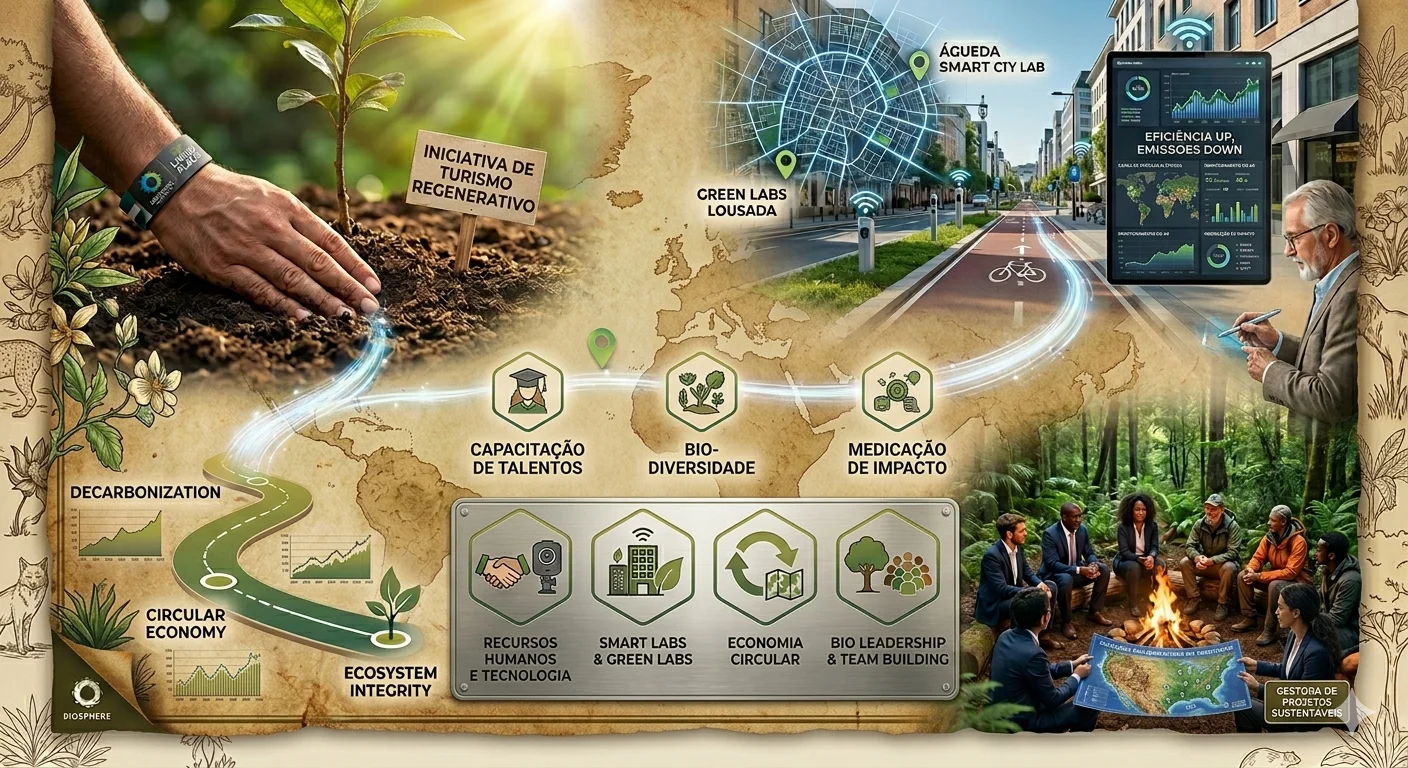
2. Innovation in Territorial Management: Smart City Lab and Green Labs
Living Place has expanded its traditional scope of activity to become an operational consultancy in urban sustainability and environmental literacy. The company works directly on pilot projects in territorial intelligence that serve as a national model:
- Águeda Smart City Lab (Since 2022): The dynamism of this living laboratory translates into the testing and implementation of urban technological solutions focused on decarbonization, energy efficiency, and smart mobility, bringing citizens closer to the concepts of open innovation.
- Green Labs (Lousada): Focused on creating more sustainable school and community environments, this project directly transfers knowledge about biodiversity, nature conservation, and ecological economics practices to the social fabric of the municipality.
3. The Circular Economy Model applied to Tourism
For Living Place, the circular economy is not an abstract concept; it is the operational basis of every structured itinerary. The planning of activities follows a closed-loop logic, minimizing waste and maximizing direct returns for the host communities. The company's conceptual framework unfolds into four essential vectors:
| Pillar of Action | Practical Application in the Field |
| Available Resources | Integrated use of lightweight technologies (collaborative digital platforms), highly qualified teams in ecological education, and unique territorial gamification methodologies. |
| Needs and Challenges | Rapid adaptation to the instabilities of global markets and response to competition through differentiation and personalization; effective management of multiple geographic locations simultaneously. |
| Collaborative Ideas | Creating regional cohesion networks that integrate hotel units, local endogenous producers, travel influencers, and external experts (such as psychologists and wellness consultants). |
| Circular Benefit | Reinvesting the generated value in the conservation of natural heritage, traceability of environmental impact, and training participants for regenerative practices. |
4. High-Impact Corporate Dynamics: Bio-Leadership and Team Building
Contemporary corporate culture demands team development formats that go far beyond mere leisure. The national and international corporate landscape seeks to empower its leaders through approaches that combine resilience, systemic vision, and empathy—characteristics intrinsic to the functioning of the natural world.
The Concept of Bio Leadership
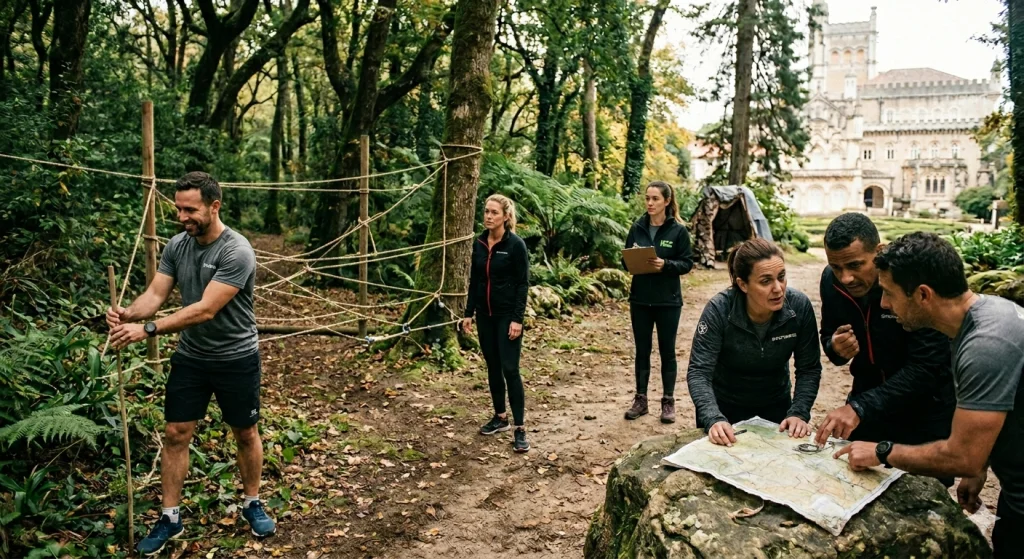
Inspired by models of biological intelligence and the resilience of forest ecosystems, the Bio Leadership Team Building program developed by Living Place repositions business leadership. Through deep immersions in natural environments—such as the ancient heritage of the Bussaco National Forest or the historic Alta Vila Park in Águeda—executives are challenged to understand the interdependence of complex systems, applying these biological insights to decision-making, crisis management, and team cohesion.
Regenerative Team Building
Practical applications, such as gamified dynamics, combine real-time problem-solving with financial literacy, climate transition, and historical-cultural knowledge of the space. Organizations don't just hold a cohesive event; they become an active part in maintaining that specific ecosystem, generating a lasting sense of shared purpose.
5. Strategic Synergies and Close Partnerships
No territory regenerates in isolation. Living Place acts as the link between the various agents in the tourism value chain. Working closely with important business associations, such as AIDA CCI (Chamber of Commerce and Industry of the District of Aveiro), the company promotes the inclusion of regional SMEs in sustainability agendas.
These partnerships extend to the integration of themed routes with local hotel units and sector specialists (such as collaboration with experts in the area of corporate well-being), offering turnkey solutions for companies that prioritize ESG (Environmental, Social, and Governance) criteria.
Conclusion: A Commitment to the Coming Decades
By aligning technological innovation with absolute respect for the biological boundaries of territories, Living Place demonstrates that tourism development and intelligent management of environmental projects can—and should—be drivers of profitability, inclusion, and conservation. Each project undertaken, from urban laboratories to leadership immersions in the forest, represents a firm step towards a future where an organization's economic success goes hand in hand with the integrity of the planet and the prosperity of local communities.
This document was produced in accordance with the Biosphere International Certification guidelines of Living Place – Tourist Entertainment.
We live Sustainability!!
Discover our Team Building services:
1. What differentiates the "Regenerative Tourism" promoted by Living Place from conventional sustainable tourism?
While traditional sustainable tourism focuses primarily on minimizing, reducing, or mitigating the negative impacts of human activity on an ecosystem (in a "do no harm" logic), regenerative tourism goes a step further. Living Place designs its experiences so that the territory is actively improved through the visit. This translates into dynamics where participants contribute directly to the conservation of local biodiversity (such as actions in the Bussaco Forest), participate in the circular economy by exclusively consuming endogenous resources, and leave a positive and measurable social and economic impact on the communities that host them.
2. How can corporate Bio Leadership and Team Building programs benefit companies' ESG strategy?
Living Place's corporate dynamics are designed from a dual-purpose strategic perspective. On the one hand, they operate in terms of leadership development, team cohesion, and systemic management, drawing inspiration from the resilience of nature itself. On the other hand, they align perfectly with ESG (Environmental, Social, and Governance) criteria: field immersions involve decarbonization data, promote climate literacy, and support the local economic fabric. This allows partner companies to translate an activity of internal cohesion into a clear and reportable indicator of social and environmental responsibility.
3. What is the role of technology and innovation in projects like the Águeda Smart City Lab led by the company?
Technology is not seen as an end in itself, but rather as a tool to facilitate sustainability. At the Águeda Smart City Lab and Green Labs, innovation serves to monitor impacts, test urban energy efficiency and decarbonization solutions, and simplify the interpretation of complex data for citizens. By combining advanced digital tools—such as territorial gamification platforms or immersive 360-degree experiences—with field-based ecological education, we are able to bring the community closer to climate transition goals in a practical, interactive, and accessible way.