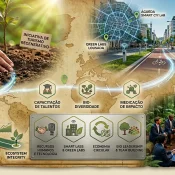
Portugal as the New Technological Guardian of the Atlantic and the Frontier of Europe is a fundamental topic for discussion and has been at the center of political debate in Europe for decades. The European Union (EU) is one of the most ambitious political and economic projects in modern history. Will it be a good solution? To answer this question, it is necessary to analyze the benefits of integration into the EU and the challenges it poses.
Modernization and Economy
The EU acts as a catalyst for modernization, primarily through the Single Market.
- Standardization: By creating common rules for products and services, the EU forces companies to modernize in order to compete in a market of over 450 million people.
- Investment in Innovation: Programs like Horizon Europe fund scientific and technological research that many countries individually would not be able to sustain.
- Green and Digital Transition: Currently, the EU is the driving force behind the decarbonization of the European economy, imposing targets that force the modernization of infrastructure.
Global Protection and Influence
In a world dominated by giants like the US and China, isolated European countries would have far less power.
- Bargaining power: Collectively, the EU is one of the world's largest trading powers. This allows it to negotiate more favorable trade agreements and protect local industries.
- Security and Geopolitics: Although military defense still relies heavily on NATO, the EU offers "bloc protection" in terms of economic sanctions and diplomacy. However, a new defense architecture for the EU independent of NATO is already being studied.
- Consumer Rights: The EU has some of the strictest data protection laws (such as GDPR) and food safety laws in the world, protecting citizens against abuses by large corporations.
Quality of Life and Communities
For the average citizen, the advantages are often so integrated into daily life that they become invisible:
- Free Movement: The possibility of living, studying (Erasmus+) or working in any of the 27 EU countries (2025) without needing a visa.
- Cohesion Funds: Countries like Portugal, Spain, and many in Eastern Europe have used EU funds to build highways, hospitals, and modernize their schools.
- Health and Environmental Standards: European legislation requires member states to maintain clean water, breathable air, and high standards of public health.
The Challenges and the Criticisms
It's not all good news. For many, the EU has some serious problems:
- Loss of Sovereignty: Countries have to cede some of their decision-making power to Brussels, which generates the feeling that "foreign laws" are being imposed.
- Bureaucracy: The European machine is often criticized for being slow, complex, and detached from the immediate concerns of the people.
- Economic Asymmetries: The single currency (Euro) benefits strong economies like Germany, but it can be a challenge for weaker economies that have more difficulty adjusting their own monetary policy.
The European Union is a powerful solution for addressing the global challenges of the 21st century, offering scale and protection. However, its success depends on its ability to retire and prove to citizens that the benefits of union outweigh the cost of losing some national autonomy. The idea of a European Federation (often called the “United States of Europe”) is the logical next step for some and a historic mistake for others. It is one of the most intense debates in current political science, especially in 2026, in a world where blocs like the US, China, and India dictate global rules.
The Specter of Political Power
Currently, the European Union is a hybrid system. It is not solely an international organization (like the UN), but it is also not a single country (like the USA).
- Confederation (What the EU appears to be in certain areas): A group of sovereign countries that cooperate but retain ultimate power (e.g., foreign policy and taxes).
- Federation (The Federalist objective): A sovereign state composed of autonomous states, with a single Constitution, Army, and Fiscal Policy (e.g., the US model).
The Arguments in Favor: "Unite to Survive"
Proponents of the Federation believe that fragmentation is Europe's greatest weakness.
- European Sovereignty: In a world of giants, countries like Portugal, France, or Poland alone have little bargaining power. A Federation would speak with one voice in military and diplomatic terms.
- Economic Efficiency (Fiscal Union): Currently we have a single currency (Euro), but 27 different tax and spending policies. A federation would allow for the direct transfer of resources to regions in crisis, just as the US does between its states.
- End of the “Democratic Deficit”: The EU government would be directly elected by citizens or Parliament, making decisions more transparent and closer to the people.
Arguments Against: "The Europe of Nations"
Negative critics argue that Europe is too diverse to be a single country:
- Identity and Culture: Unlike the US, Europe has thousands of years of diverse languages, histories, and challenges. Many fear that national identities will be crushed by a central bureaucracy in Brussels.
- Distance from Power: If even today (2026) many feel that Brussels' laws are distant, in a federation, a citizen in Lisbon might feel that their vote counts for very little in deciding the fate of a superstate of 450 million people.
- Economic Divergence: What works for Germany's industrial economy may be disastrous for the service and tourism economy of southern Europe. A single fiscal policy could stifle the specific needs of each region.
Where are we in 2026?
The debate has become urgent. With geopolitical instability and the need for a more robust common defense, Europe is currently at a crossroads:
- To deepen integration: Create a European Ministry of Finance and a European Army (the federal path).
- Maintaining the Status Quo: Continuing as a union of states that collaborate, but often block decisions due to a lack of unanimity.
- Point for Reflection: The question is not only whether Federation is a good solution, but whether it is possible without Europeans first feeling like European citizens and only then feeling like Portuguese or French citizens, for example, thus losing some of their regional identity.
The creation of a single European army is one of the most sensitive and complex issues in European integration. For Portugal, a country with a long Atlantic tradition and a vast maritime area, the implications would be profound.
The Impact on Portugal's Security
Portugal faces very specific geographical challenges that differ, for example, from those of Eastern European countries.
- Defense of the Sea: Portugal possesses one of the largest Exclusive Economic Zones (EEZs) in the world. A European army (which would include a European navy) could provide technological and naval resources that Portugal alone has difficulty maintaining to patrol such a vast area.
- Cost Sharing: Military modernization (F-35 or Gripen fighter jets, cyber defense, satellites, air defense) is extremely expensive. In a federal model, the cost would be spread across 27 countries, allowing Portugal access to cutting-edge technology.
- Loss of Autonomy: On the other hand, Portugal would lose the ability to decide for itself, namely where it could and should send its troops. If there were a conflict in Eastern Europe, Portuguese soldiers would be mobilized by a decision from Brussels, regardless of the direct will of the government in Lisbon.
The Relationship with NATO (OTAN)
The big question is: would a European army be a partner or a competitor to NATO?
- Complementarity: Many argue that a single army would be the European mainstay of NATO. It would strengthen the alliance, making Europe less dependent on the political will of the United States.
- Duplication of Structures: Critics argue that creating a European command when NATO command already exists is a waste of resources and could create diplomatic divisions.
- The Nuclear “Umbrella”: Currently, Europe’s nuclear security depends almost entirely on the US (and to some extent on France). A European military would have to decide whether it wants its own independent nuclear capability.
Practical and Strategic Challenges
There are obstacles that make creating this army a slow process:
Regarding Language and Command, what would be the official language of command and how would soldiers from 27 different cultures be coordinated? This would be one of the points to be resolved in this strategic challenge. In terms of Distinct Priorities, while Poland and the Baltics see Russia as the greatest threat, Portugal, Spain, and Italy are more focused on instability in North Africa and the Sahel. And regarding the defense industry, countries like France and Germany would certainly want the European Army to buy their weapons, which could harm the defense industries of smaller countries.
For Portugal, a European Army would mean exchanging its historical military autonomy for more robust collective security. The country would cease to be a small Atlantic power and become a key player on the western border of a European superpower. Currently, intermediate steps already exist, such as PESCO (Permanent Structured Cooperation), where countries collaborate on specific projects without relinquishing their national armies. PESCO is often described as the "Schengen of Defence." It is the mechanism that allows European Union countries to work together on specific military projects without immediately creating a single army. Portugal has been one of the most active countries in PESCO, focusing on areas where it already has a strategic advantage: the Sea and Cyberspace.
How does PESCO work?
Unlike other European initiatives, PESCO is voluntary to join, but binding in its commitments.
- "À la carte" projects: Countries choose which projects they want to participate in (e.g., developing a new drone, creating a pilot training school, or a field hospital).
- Commitments: Once in a project, countries are obligated to invest and meet military readiness targets.
Portugal's Participation
Portugal currently participates in more than a dozen PESCO projects. These are the three areas with the greatest impact:
- 1) Maritime Surveillance (The “Atlantic Focus”): Portugal leads or co-leads projects aimed at protecting maritime communication lines.
– Unmanned Maritime Systems (Underwater Drones): Portugal is one of the leaders in developing technology to detect submarines or protect submarine data cables (vital for the global internet) using drones.
– Operational Training Center: Creation of infrastructure so that navies from all over Europe can train in Portuguese waters.
- 2) Cyber Defense: Portugal integrates Cyber Rapid Response Teams (CRRTs).
These are rapid intervention teams composed of experts from various countries (including Portugal) who can be mobilized to assist any member state under a massive cyberattack. - 3) Military Mobility: This is one of PESCO's most important projects. The goal is to adapt roads, bridges, and railways so that tanks and heavy equipment can cross Europe quickly in case of crisis, reducing bureaucracy at borders.
Advantages and Risks for Portugal
| Advantage | Risk / Challenge |
| Access to Technology: Portugal develops defense technology that it could never finance on its own. | Financial Cost: Participating in these projects requires a considerable portion of the state budget. |
| Strategic Importance: It ensures that the EU looks to the Atlantic and not just to its eastern land borders. | Industrial Dependency: There is a risk that Portuguese companies will be overshadowed by French or German giants. |
| Enhanced Sovereignty: Better ways to control piracy and trafficking in our EEZ. | Political Alignment: It necessitates a constant political consensus on the role of the Armed Forces. |

The Future: The Center of the Atlantic in the Azores
One of Portugal's greatest assets in this cooperation is the Atlantic Centre in the Azores. Portugal wants this center to become the headquarters for maritime intelligence and security for the entire EU and NATO in the middle of the ocean.
In this line of thought, it's possible to say that PESCO allows Portugal to modernize its Armed Forces and maintain its international relevance without abandoning its flag or national identity. It thus constitutes a form of smooth integration that paves the way for something more ambitious in the future, insofar as PESCO is not just a military agreement; it's a massive industrial opportunity. For Portugal, the great benefit lies in the fact that PESCO is directly linked to the European Defence Fund (EDF), which provides billions of euros for research and development (R&D). Here are four practical ways in which Portuguese technology companies and industry benefit:
1. Access to Elite Funding (The European Defence Fund)
PESCO projects have absolute priority in accessing the European Defence Fund.
- Investment in R&D: Portuguese companies can apply for funds that cover up to 100% of research costs. This allows national small and medium-sized enterprises (SMEs) to develop cutting-edge technologies without the financial risk they would face if they pursued this path alone.
- Scale: Instead of producing only for the small market of the Portuguese Armed Forces, companies are now developing solutions for a market of 27 countries.
2. Integration into International Consortia
It would be difficult for a Portuguese company like Critical Software or Tekever to compete alone against giants like Airbus or Thales. However, PESCO and EDF rules encourage cross-border cooperation.
- Strategic Partnerships: Large European companies are "obliged" to include SMEs from other countries (such as Portugal) in their consortia to obtain higher scores in tenders.
- Knowledge Transfer: Portuguese engineers end up working side-by-side with the world's leading experts, bringing this know-how back to the national economy.
3. Areas of Specialization in Portugal
Portugal already has considerable influence in areas that PESCO considers priorities. The impact is visible in three sectors:
- Aeronautics and Space: The aeronautical cluster in Évora and companies like CEiiA benefit from persistent surveillance projects and new satellite systems.
- Drones and Autonomous Systems: Portugal is a leader in maritime drones. PESCO projects like MUS (Maritime Unmanned Systems) allow Portuguese companies to lead the creation of robots that detect mines or monitor the seabed.
- Cybersecurity and Software: Many of the technology companies in Coimbra, Lisbon, and Porto supply the encrypted communication systems and digital defenses used by European forces.
4. The Concept of “Dual Use” (Civil and Military)
This is perhaps the greatest benefit to the economy as a whole. Many technologies developed in the field of defense end up having lucrative civilian applications, for example:
- An artificial intelligence algorithm developed to detect suspicious ships off the coast could be adapted to monitor ocean health or prevent illegal fishing.
- Lighter and stronger composite materials created for armor could be used in the automotive industry or in medical prosthetics.
The Role of “idD Portugal Defence”
To organize all of this, the Portuguese State uses idD Portugal Defence, an entity that acts as a bridge between the Ministry of Defence, Universities, and Companies. This entity helps identify opportunities in Europe and promote Portuguese expertise in Brussels. idD Portugal Defence aims to be recognized as a benchmark in supporting the Military Branches through industry. Its actions combine the management of the shareholdings that the Portuguese State holds in companies in the Defence sector with industrial activity in the area of munitions and with the promotion of the development of a competitive, technologically advanced National Defence industry with qualified resources to support the Portuguese Armed Forces.
| Economic Impact | Result for Portugal |
| Exports | Increased sales of high value-added technologies (less dependence on other economic sectors). |
| Skilled Employment | Retaining talent (engineers and scientists) within the country. |
| Technological Sovereignty | Less dependence on technology purchased outside of Europe (USA or China). |
Flagship Companies and Successful Projects
It is important that we know some of the most emblematic examples of companies and projects that illustrate significant success in Portugal. Here are four examples:
- Tekever (Autonomous Systems and Drones): Tekever is perhaps the most recent international success story. This company is one of the world leaders in drone systems (UAVs) for maritime surveillance.
– The role in Europe: Tekever provides technology to the European Border and Coast Guard Agency (Frontex) and participates in PESCO consortia.
The benefit: Thanks to European defense funds, the company was able to develop drones that can autonomously launch rescue boats or detect oil spills imperceptible to the human eye. They have been very useful in the war in Ukraine for monitoring and defending Ukrainian territory. - Critical Software (Critical Systems and Security)
Based in Coimbra, the company Critical Software is a leader in systems that "cannot fail" (used in NASA, ESA and railways).
– The role in Europe: Within the European defense sector, Critical Software works on the development of mission software for aircraft and command and control systems.
The benefit: Integration into PESCO allows you to be at the core of decision-making regarding what the European military software standards will be for the coming decades, guaranteeing long-term contracts. - CEiiA (Engineering and Mobility)
CEiiA (Center for Engineering and Product Development), in Matosinhos, is a pillar in the aeronautics industry.
– Their role in Europe: They are involved in the development of new aircraft structures and intelligent mobility systems. They participate in “Smart Cities” projects that have security and cyber resilience components funded by the EU.
The benefit: It allows hundreds of Portuguese engineers to remain in Portugal, working on projects that previously would only have existed in Germany or France. - GMV Portugal (Space and Cyber Defense)
Although it is part of an international group, GMV Portugal has enormous technological autonomy in Lisbon.
– Their role in Europe: They lead European projects in Cyber Defense and satellite navigation systems (Galileo). They are experts in ensuring that military communication systems are not "hacked".
The benefit: GMV Portugal has become a global center of excellence within the group itself, attracting foreign investment to Lisbon's technology hub.
But where is the benefit for the average citizen based on these companies and projects?
The Portuguese, and even other Europeans, might ask: "But what do citizens gain from drones and military software?" The impact is indirect, but real:
- High-Value Economy: These companies pay higher-than-average salaries, generating more taxes that support the public healthcare system (SNS) and education.
- Data Sovereignty: By using software from Critical Software, for example, instead of American or Chinese software, critical data from Portugal and Europe is protected by European laws.
- Civil Protection: Tekever's drone technology, developed for defense, is the same technology that today helps detect forest fires in Portugal before they get out of control.
As a curiosity, did you know that Portugal is one of the countries that recovers the most money from the European Defence Fund in proportion to its GDP? This happens because our technology companies are highly competitive.
Is technological growth reaching other regions of the country equally, or is it heavily concentrated in Lisbon and Porto?
This is one of the most critical issues for the country's development: preventing technological modernization from creating a two-speed highway. Although economic power and major decision-making centers are still heavily concentrated in the Lisbon-Porto axis, the defense and technology strategy (driven by PESCO and the EU) has served to decentralize innovation in Portugal. Here are four points of analysis of how this growth is distributed across Portuguese territory:
- The Knowledge Triangle (North and Center)
It's not just Porto; the North and Central regions of Portugal form the country's technological base thanks to their universities:
– Braga and Guimarães (University of Minho): The nanotechnology and new materials sector (essential for military armor and sensors) is very strong in these two cities. The textile cluster in the Ave Valley is also modernizing to create "smart textiles" for advanced uniforms for the Armed Forces.
– Coimbra: As we saw with Critical Software, Coimbra is the nerve center of software and systems security. The university fosters an ecosystem of startups working on defense algorithms. - Alentejo Aeronautical Cluster (Évora and Beja)
This is the most successful example of industrial decentralization in recent decades:
– Évora: It has become the aeronautical center of Portugal. With the presence of companies such as Embraer and suppliers to Airbus, the region produces high-tech components for military and civilian aircraft.
– Beja: Beja airport and surrounding areas are being prepared to serve as test centers for large drones and new satellite technologies. - The Economy of the Sea and the Azores
PESCO and the European defence strategy are putting islands and coastal areas on the innovation map:
– Azores (Santa Maria and Terceira): The creation of the Atlantic Centre and the spaceport in Santa Maria are strategic projects. The goal is for the Azores to be not just a transit point, but a hub where satellite data is processed and maritime traffic from across the EU is monitored.
– Viana do Castelo: Shipyards are trying to modernize to build ocean patrol vessels with a greater technological component, integrating drone systems developed in Portugal. - Obstacles to Decentralization
Despite this effort, there are still real challenges for a young engineer choosing the countryside instead of the capital:
– Digital Infrastructure: For a cybersecurity company to establish itself in Castelo Branco or Bragança, it needs fiber optic networks and ultra-low latency 5G, which is not yet uniform across the country.
– Supporting Ecosystem: Defense companies need to be close to test centers. If all firing ranges or maritime test zones are concentrated in one place, companies tend to gravitate towards it.
| Region | Specialization in Defense/Technology |
| North | Nanotechnology, Technical Textiles and Robotics. |
| Center | Critical Software and Cybersecurity. |
| Lisbon and Setúbal | Command and Control, Electronics and Naval Maintenance. |
| Alentejo | Aeronautics and Space Systems. |
| Azores | Space Surveillance and Atlantic Monitoring. |
We can say that Portugal is succeeding in spreading the industry of the future to various parts of the country, using Defense as a base to invest in cutting-edge engineering where previously only agriculture or traditional industry existed. This is an evolution that has begun and is intended to be carried out with quality and as quickly as possible to improve the quality of life of the population with more quality jobs, greater security for the country and the entire European Union.
The Project in Santa Maria
The project in Santa Maria, Azores, is one of the most strategic pieces of Portugal's and the European Union's technological sovereignty in 2026. It's not just about launching rockets; it's about transforming Portugal into a global space player. Here are four key points to understand what is happening on this Portuguese island:
- Why Santa Maria?
The location of Santa Maria Island in the Azores is considered one of the best in the world for space activities for several reasons:
– Launch Angle: The position allows launches into polar and sun-synchronous orbits over the ocean, without flying over inhabited areas, which is a critical safety requirement.
– Existing Infrastructure: The island already has an important ESA (European Space Agency) tracking station, which monitors famous missions such as Ariane and Galileo. - The Spaceport (Azores International Satellite Launch Programme)
The main objective is the creation of a "Spaceport" for small satellites.
– The New Market: Unlike the enormous rockets of the past, the future lies in microsatellites (the size of shoeboxes) that require frequent and inexpensive launches.
– Reusable Launchers: The project focuses on attracting “New Space” companies that use more sustainable and cost-effective technologies. - The Technological and Economic Impact
This project acts as a magnet for other technologies:
– Land Segment: Santa Maria is becoming a data processing center. Data collected by satellites (on climate, illegal fishing, or navigation) is downloaded and analyzed directly on the island.
– Space Cybersecurity: As satellites are targets of cyberattacks, Portugal is developing expertise in protecting these communications, directly linking this area to PESCO projects.
– Education and Science: The “Air Centre” (Atlantic International Research Centre) uses these infrastructures to study climate change and marine biodiversity in a way that was previously impossible. - Challenges and Controversies
Like any project of this scale, there are obstacles:
– Environmental Impact: As the Azores are a biodiversity sanctuary, there is constant concern about the impact of discharges on the local ecosystem.
– International Competence: Other countries, such as Norway and the United Kingdom, are also building spaceports. Portugal needs to be faster and more efficient in its licensing processes.
| Project Pillar | Benefit for Portugal |
| Sovereignty | Portugal will no longer depend on other countries to put its own satellites into orbit. |
| Geopolitics | It reinforces Portugal's position as a bridge between Europe and space, just as it was during the Age of Discovery. |
| Job | Attracting aerospace engineers and data scientists to an ultra-peripheral region. |
Portugal is also involved in the ESA's Space Rider project, a reusable space vehicle (a kind of unmanned mini-shuttle) that could land in Santa Maria after completing missions in orbit. This would place the Azores in the select group of locations in the world capable of launching and recovering space vehicles.
Another important issue involving the Azores islands is the connection between the Santa Maria Spaceport and the submarine cables that defines Portugal as the "Data Hub" of Europe by 2026. These two pillars form a defense and economic infrastructure that is vital to the European Union. Let's talk a little about how these two worlds connect through technology and security in four different themes:
- Azores: The "Knot" of Global Telecommunications
Approximately 97% to 99% of all internet traffic between Europe and the Americas passes through submarine cables that cross the waters of the Azores.
Vulnerability: If a cable is cut (by sabotage or accident), the European economy could grind to a halt.
– The New Generation (Atlantic CAM): Portugal is implementing a new cable ring between the mainland, the Azores, and Madeira. These cables include SMART (Science Monitoring And Reliable Telecommunications) technology, which uses sensors to detect earthquakes, tsunamis, and even suspicious ship movements on the seabed. - How Space Protects the Sea
The Santa Maria Spaceport is not only used to launch communications satellites, it is also used to launch Earth observation satellites.
– Real-Time Surveillance: Satellites launched from the Azores can monitor "ghost" ships (with GPS turned off) that approach areas where submarine cables are installed.
– Redundancy: If submarine cables suffer a massive attack, microsatellite constellations (like the ones Portugal wants to help launch and manage) serve as backup to ensure that critical communications for the State and the Armed Forces do not fail. - PESCO's role in protecting the seabed.
Portugal leads and participates in PESCO projects focused precisely on this: the Protection of Critical Underwater Infrastructure (CSIP). This is a growing priority for the EU and Portugal, due to its vital importance for the economy and security, with the Navy and entities such as INEGI developing solutions, focusing on surveillance, cybersecurity and international cooperation to address hybrid threats and ensure resilience, adapting old laws to the current strategic reality.
– Underwater Drones: As a replacement for the use of more expensive ships, the Portuguese Navy and national companies are developing small drones that patrol cables on the ocean floor.
– Cybersecurity: Santa Maria will be a data center where information from satellites is cross-referenced with information from sensors on cables, creating a digital shield over the Atlantic. - The Strategic Triangle of Santa Maria
By 2026, the island of Santa Maria will ALREADY function as a technological headquarters:
– Space: Launching and controlling satellites.
– Sea: Monitoring of submarine cables and biodiversity.
– Data: Reception and protection of the internet that connects Europe to the rest of the world.
| Infrastructure | Role in Defense | Impact for the Citizen |
| Spaceport | Launching surveillance satellites. | Cheaper internet and resilient communications. |
| Submarine Cables | Transport of 98% of the data. | Guarantee that banking services and social networks will not be affected. |
| PESCO / Marine | Patrols using drones and ships. | National security and protection against espionage. |

This convergence of technologies is what makes Portugal indispensable to the European Union. Without the control and protection of this triangle in the Azores, Europe would be blind and mute in the Atlantic.
When it comes to technological development, the Brazilian Navy is also undergoing one of the most profound transformations in its history. By 2026, the concept of a warship is changing: the focus is no longer solely on direct combat between ships, but on data management and the protection of invisible infrastructure, such as fiber optic cables. Here are the three fundamental pieces of this new re-equipment:
- The “Drone Carrier” SPR D. João II
This is the new flagship of Portugal's technological strategy. With delivery scheduled for the second half of 2026, it is a unique naval platform in the world:
– Drone Mother: The ship has a 94-meter deck for aerial drones and specific hangars for underwater vehicles (UUVs) and surface vehicles (USVs).
– Cable Surveillance: This ship will function as a mobile base for drones that descend to the seabed to inspect and protect submarine cables from sabotage or espionage (such as the monitoring of Russian spy ships, which has been quite frequent).
– Multifunctional: In addition to defense, it can be used for scientific research (carrying 42 scientists on board) and medical emergencies, functioning as a floating hospital. - The New Fleet of Ocean Patrol Vessels and Trimarans
Portugal is renewing its patrol fleet to ensure a constant presence in the Atlantic:
– Ocean Patrol Vessels (OPVs): Six new vessels with greater technological capacity to operate in a network with satellites are being built in Viana do Castelo.
– New Trimarans (Madeira and Azores): By 2026, the introduction of new coastal patrol vessels in trimaran format (three hulls) is planned. These vessels are much faster and more stable, ideal for intercepting illicit activities and protecting the mooring areas of submarine cables in the islands. - National Robotics: The REPMUS Exercise
Portugal annually hosts REPMUS (in Troia and Sesimbra), the world's largest maritime robotics exercise.
– The Living Lab: This is where the Navy, along with NATO and Portuguese companies, tests robots like TURTLE (a lander robot that can stay on the seabed for months “listening” to suspicious vibrations in the cables). A lander robot is a robotic vehicle designed to autonomously land in another predetermined location (such as the Moon or Mars) or on the seabed, with the aim of exploring, collecting data, searching for resources, or preparing the way for human missions.
– Agreement with Ukraine: In late 2025/early 2026, Portugal signed a historic agreement for the joint production of underwater drones with the introduction of Ukrainian technology, leveraging Ukraine's real combat experience to protect Portuguese waters and assist Ukraine in the war against the invasion of its territory by Russia.
The “Atlantic CAM” Plan in 2026
We might ask what all these ships and drones are for? The answer is simple and pragmatic: To protect the Atlantic CAM (Mainland-Azores-Madeira), the new submarine cable system that is being contracted for 2026.
For Active Monitoring, the Portuguese Navy will have the ability to correlate data from the cables' own sensors with the position of ships detected by drones and satellites.
| Equipment | Function in Cable Protection |
| SPR D. João II | Launches drones for deep visual inspection. |
| TURTLE / EVA robots | Static and relocatable surveillance equipment located near the cables. |
| Patrol Trimarans | Rapid interception of ships dropping anchor or deploying probes in prohibited areas. |
| Satellites (S. Maria) | Early detection of suspicious vessels in the EEZ. |
This strategy ensures that, in the event of an international crisis, Portugal not only protects its own internet, but also protects the backbone of the European Union's communications network.
How can these new naval technologies help in environmental preservation and the fight against illegal fishing?
This convergence between environmental protection and digital security is what experts call "Holistic Defense." By 2026, the Portuguese Navy will not only protect the border; it will protect the ecosystem and the data flow that allows the country to function. Here are some examples of how these technologies apply in practice:
- Combating Illegal Fishing and Protecting the Environment
Portugal has brought forward its goal of protecting 30% of its marine areas to 2026. To monitor such a vast area without spending fortunes on fuel and new materials, the solution is technological:
– “Green” Drones: The Navy is integrating autonomous vessels (such as the drone developed by the company TecnoVeritas) that use clean energy and can navigate for weeks. These drones detect prohibited fishing nets or polluting discharges from merchant ships.
– Digital Twins (DUVOPS Project): Led by the Polytechnic Institute of Leiria, this project creates a digital copy of the ocean. Using Artificial Intelligence, the system predicts where illegal fishing is most likely or where an oil spill will spread, allowing the Navy to send resources only where they are truly needed.
– The Coral Police: Underwater drones are used to monitor the health of protected areas, ensuring that illegal trawling does not destroy sensitive ecosystems on the seabed. - Cybersecurity: The Data Shield
As we have seen, submarine cables are the nervous system of Europe. By 2026, naval cybersecurity will focus on two points:
– DAS (Distributed Acoustic Sensing) Technology: This innovation allows the use of fiber optic cables themselves as giant acoustic sensors. If a submarine or anchor approaches the cable, the vibration is detected instantly and the Navy is alerted. This technology, called FiberSense, transforms existing fiber optic cables into massive sensor networks, using the light that travels through these cables to detect vibrations and movements in real time, allowing the monitoring of critical infrastructure (such as underground pipelines and cables) through algorithms to filter noise and provide actionable data without installing extra hardware.
– Protection against Offensive AI: With the increase in cyberattacks generated by AI, the Portuguese Cyber Defense Operations Command (COCiber) is working with national technology companies to create protective bubbles around cable anchoring stations (such as in Sines or Carcavelos).
– Strategic Partnerships: Portugal has signed collaboration protocols with countries such as Ukraine and Italy to share defense tactics against drones and attacks on critical infrastructure, ensuring that national technology is always one step ahead of the attackers.
| Area | Key Tool | Goal in 2026 |
| Illegal Fishing | Drones and AI (DUVOPS) | Zero tolerance for fishing in protected areas. |
| Environment | Sensors at SPR D. João II | Real-time monitoring of climate change. |
| Cybersecurity | Smart fiber optics | To make the cables "aware" of what is happening around them. |
| Sovereignty | Santa Maria Data Center | To ensure that Portugal controls who accesses the data in the Atlantic. |
The European Union and the European Federation may be abstract political concepts, but in Santa Maria, in Sines, or in the Azores sea, they translate into real sovereignty. With investment in drones, satellites, and smart cables, Portugal ceases to be just a small country and becomes the technological guardian of one of the world's most important shipping routes.
A Strategic Synthesis
The journey we have undertaken throughout this article, from theoretical debates about the future of the European Union to practical operations at the Santa Maria spaceport, reveals a profound transformation in Portugal's strategic identity. By 2026, the country will no longer define itself solely by its geographical periphery, but will assert itself through its technological centrality.
By embracing mechanisms like PESCO and leading in the protection of the Atlantic's "digital veins," Portugal has demonstrated that European integration does not have to be a zero-sum game where sovereignty is lost. On the contrary, it was through cooperation that the country gained the scale to modernize its industry, decentralize innovation, and protect its vast maritime territory with 21st-century tools.
Portugal has reinvented itself as the indispensable guardian of Europe's western border. Whether through a drone protecting a protected marine area, a satellite monitoring trade routes, or a submarine cable ensuring continental connectivity, the message is clear: Portugal's future lies in being the intelligent platform that connects the Atlantic to the heart of Europe.
(The images in this article were generated by AI)
1 – Why is Portugal considered the “Technological Guardian of the Atlantic” in the European context?
Portugal occupies a unique geographical position, managing one of the world's largest Exclusive Economic Zones (EEZs) and serving as a mooring point for submarine cables that carry 98% of the world's data. By 2026, the country will reaffirm itself as a technological guardian by leading projects to protect these critical infrastructures and transforming the Azores into a maritime intelligence and security hub for the EU and NATO. This centrality makes Portugal indispensable in ensuring that Europe does not become "blind or mute" in the Atlantic.2 – What is the strategic importance of the Santa Maria Spaceport in the Azores?
The Santa Maria Spaceport is a key component of European technological sovereignty, leveraging one of the world's best locations for launching satellites into polar orbits over the ocean. The focus is on the microsatellite and reusable launcher market, enabling real-time monitoring of ships and protection of submarine cables. This ecosystem transforms Portugal into a global space player, ensuring redundancy in critical communications and boosting the "New Space" economy.3 – How are the Portuguese Navy and the PESCO project modernizing national defense?
Modernization involves a transition to data-driven management and drones, notably the new flagship NRP D. João II, a "drone carrier" platform dedicated to seabed surveillance. Through PESCO (Permanent Structured Cooperation), Portugal collaborates with European partners in areas such as cyber defense and unmanned maritime systems. This effort allows the country to access cutting-edge technology and reduce costs, strengthening national security and protecting the western borders of the European Union.