
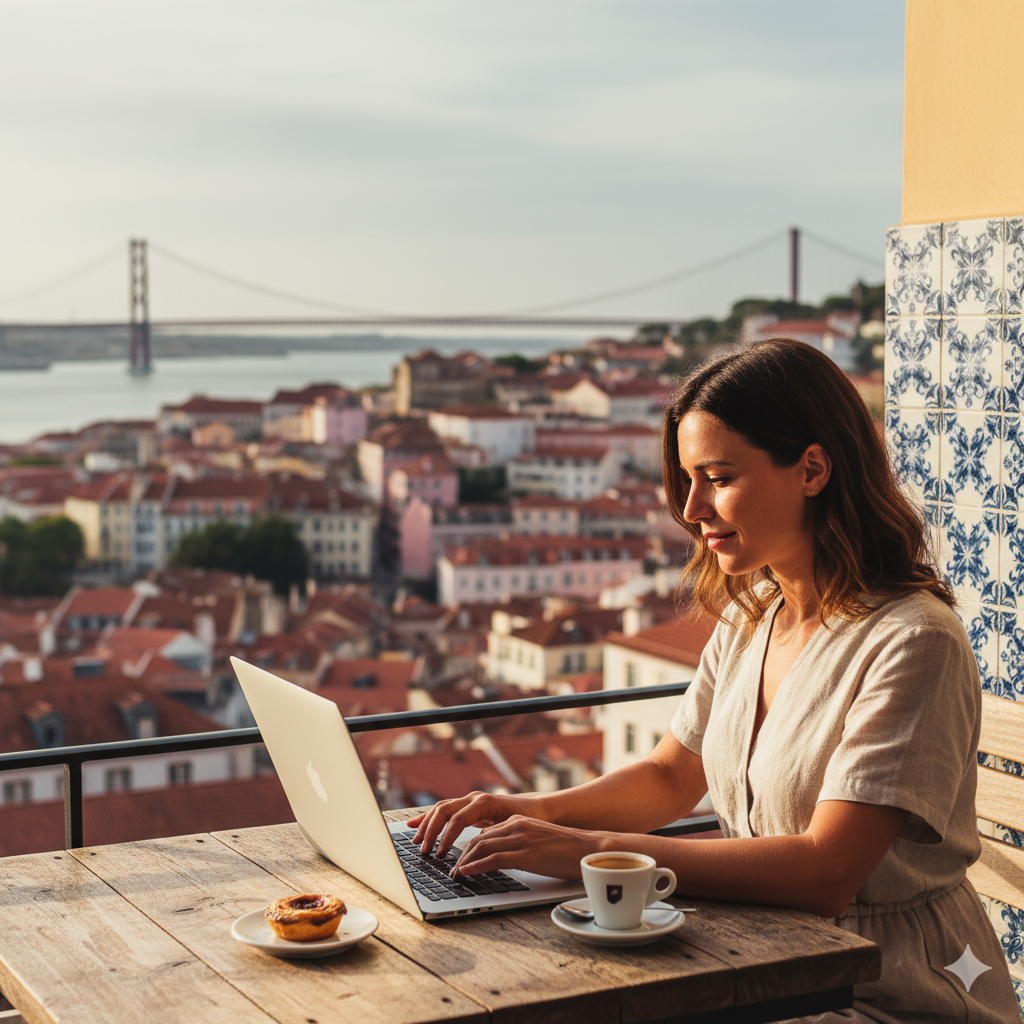
Digital Nomads in Portugal
Digital Nomads in Portugal: The Ultimate Guide to Living, Working, and Integrating into the Local Culture
The global work landscape has undergone a radical transformation, and the possibility of combining a demanding professional career with cultural exploration and quality of life has never been more tangible. In this new paradigm, Portugal, with its mild climate, renowned safety, and remarkable friendliness of its people, has quickly established itself as one of the most coveted destinations on the planet for the growing international community of Digital Nomads. However, establishing yourself as a remote professional in Portugal requires more than just good Wi-Fi access and a café with a privileged view; it implies a careful understanding of bureaucratic nuances and, above all, a genuine and active desire to integrate into the rich and ancient local culture.
Portugal has perceptively recognized the economic value and importance of this new wave of residents, adapting its legal framework to accommodate them. For those seeking to establish residence for a period longer than a year, there are essentially two legal avenues to consider. On the one hand, the D7 Visa, traditionally called the Self-Employed Income Visa, is ideal for those who already have stable passive income sources—such as retirement, rental income, or investments—that do not depend on the provision of direct services. On the other hand, the more recent and specific Digital Nomad Residence Visa (which can be for Temporary Stay or Residence) was created expressly for professionals who work remotely for entities based outside the country, requiring proof of a monthly income that currently stands at approximately four times the national minimum wage. It is crucial to emphasize that the bureaucratic process, although increasingly agile, requires patience and the consultation of specialized advice, whether legal or accounting, since this text is intended to be merely informative and a starting point for research.
The country's attractiveness is further enhanced by the Non-Habitual Resident Regime (NHR), a powerful tax incentive. This regime allows, under certain conditions and for a period of ten years, income from certain high-value-added professions or income earned abroad to benefit from special tax rates or, in some cases, exemptions. The combination of this tax advantage with Portugal's high quality of life and security creates a value proposition that is difficult to match.
When it comes to remote work, the mobility of Digital Nomads isn't confined to large urban centers. The search for a more authentic experience and a lower cost of living has spread the community throughout the country. While Lisbon and Porto remain networking hubs and host excellent coworking spaces, Madeira Island, with its pioneering "Digital Nomads Madeira" project, mid-sized cities, and the country's interior offer a seductive alternative for those seeking greater tranquility and deeper cultural immersion. The country's digital infrastructure is up to the challenge, with fiber optics widely available in key areas and 4G and 5G rapidly expanding, ensuring the reliability necessary for communication and productivity.
However, true success as a Digital Nomad in Portugal is measured by the ability to go beyond the screen and truly integrate into everyday life. This is where the essential touch lies. Although English is a common language in business and tourism circles, learning Portuguese is the golden key to integration. Simple politeness (“Good morning,” “Thank you”) and the ability to order at a café are not just acts of communication; they are gestures of respect that open doors and facilitate social life. It's also important to adapt to the Portuguese pace, which can sometimes be slower than expected. Patience in bureaucracy is vital, and understanding that “Lunch Time” is a culturally and socially significant break, not a hurried snack, demonstrates a genuine willingness to embrace local customs. For genuine integration, it's recommended to try to go beyond expat circles: visit municipal markets and chat with vendors, participate in popular festivals, and, above all, embrace café culture as a meeting and socializing spot, not just an alternative office. In short, being a Digital Nomad in Portugal is more than running a business from a new location; it's a lifestyle decision that offers the opportunity to create a richer, more balanced, and more meaningful life, where your career supports your passion for discovery and deep cultural experience. The key to lasting success lies not only in the reliability of your internet connection, but in your willingness to embrace the country with the same warmth with which it welcomes you.
(The image in this article was generated by AI)
1 – What are the main legal ways for a Digital Nomad to reside in Portugal?
There are fundamentally two legal routes: the D7 Visa, ideal for those with stable passive income (such as pensions or investments), and the Digital Nomad Residence Visa, created specifically for those who work remotely for entities outside of Portugal. The latter requires proof of an average monthly income of approximately four times the national minimum wage. Both options allow you to enjoy the safety and quality of life in the country, and specialized support is recommended to handle the bureaucratic process.
2 – What tax and infrastructure benefits does Portugal offer to remote workers?
Portugal offers the Non-Habitual Resident (NHR) regime, a tax incentive that allows for special tax rates or exemptions on foreign income for a period of ten years. In addition to these advantages, the country boasts excellent digital infrastructure, with widely available fiber optics and expanding 4G/5G networks. Cities like Lisbon, Porto, and the “Digital Nomads Madeira” project are prime networking hubs, but the interior and medium-sized cities also offer tranquility and high-quality connectivity.
3 – How can a Digital Nomad better integrate into Portuguese culture and daily life?
Genuine integration goes beyond a good Wi-Fi connection; it involves learning the basics of the Portuguese language and respecting local rhythms, such as the social value placed on "lunchtime." It is recommended that digital nomads visit municipal markets, participate in popular festivals, and embrace café culture as a space for socialization. Lasting success in the country depends on the willingness to embrace the local community with the same warmth with which Portugal welcomes its new residents, creating a richer and more balanced lifestyle.

Recent Posts


The Best Artificial Intelligence Tools to Optimize Your Daily Life in 2026
The Future of Regenerative Tourism and Smart Land Management
Tags

Routes
Score faster
+351 916 717 442
+351 910 741 061
